RSS

A Week of Ordinary Heroes & Extraordinary Cowards

imagesOver the course of the last few days as the country has sat glued to the tragic events unfolding in Boston, while keeping an eye on the aftermath of the Texas fertilizer plant explosion, it’s understandable that the Senate’s gun vote on background checks from earlier in the week, has been almost completely forgotten. But here is why the votes of 46 Senators, 4 Democrats and 42 Republicans, mustn’t be allowed to fade from our public consciousness.

As the heroic emergency services and first responders in Massachusetts and Texas were putting their lives on the line to protect and care for their fellow citizens, proving yet again the bravery and moral decency of ordinary Americans, 46 elected officials were giving a graphic illustration of the moral bankruptcy that has taken root in the legislative branch of our government.


images-4In the aftermath of the Newtown atrocity, and with most polls showing that 90% of the public favored closing the gaping loophole on background checks, why exactly did these Senator’s chose to ignore the wishes of the people they were elected to serve? The answer is both simple and callous, and has provided one of the most graphic examples in recent memory of how that purest of American Democratic ideals; “government by the people, and for the people”, is being threatened by the very people we elected to uphold it.


These cowardly Senator’s including Richard Burr from my own state of North Carolina, ignored their constituents and their consciences, and ensured that violent rapists, terrorists and the mentally ill, will continue be able to get hold of military style automatic weapons with far greater ease than they can pick up a pack of Sudafed. As Vice-President Biden somberly announced the results of the vote, one woman spoke for the moderate majority as she shouted “shame on you” from the gallery. So why did they vote NO, and what does it tell us about what is broken in our political system?


images-1BRIBARY: Firstly they voted this way because many have received election funds from the NRA and other gun-lobby related special interest groups, and they didn’t want to upset their past and future paymasters.


COWARDICE: Secondly, many Republicans have perpetually seen moderate representatives face challenges from well-funded right-wing candidates for their seats, and they didn’t want to arouse the forces of the militant right against them.


images-3CALCULATION: Thirdly, they recognize there is an immigration bill looming, where they will likely need to vote YES in an attempt to win back a small percentage of the growing Hispanic vote, against the wishes of their more extreme right-wing supporters. They were afraid to antagonize this well funded group on back-to-back bills.


So in a week where ordinary heroes were risking their lives to keep their fellow citizens safe, 46 of their elected representatives demonstrated extraordinary cowardice, along with their calculating natures, and a willingness to be bribed.


images-2To echo the words of the woman in the gallery we should all say to them “shame on you”, and for myself I commit to live up to my responsibility as a citizen of the great state of North Carolina, and do all in my power to see that at least one of these unworthy Senators is democratically replaced at the next election.


Reblogged from Jeremy D Holden:

Given the events unfolding today at the 2012 British Open at Royal Lytham with the Tiger, Scott and Stevie shaping up for Sunday, I wanted to reissue this rather topical post from last year.

This post seems especially pertinent given Adam Scott's gutsy victory tonight at the Masters. Here's to him and the ultimate "Shadow Man", his caddie Stevie Williams. Go Aussie.
 
Leave a comment

Posted by on April 14, 2013 in Uncategorized


Margaret Thatcher’s Social Contract

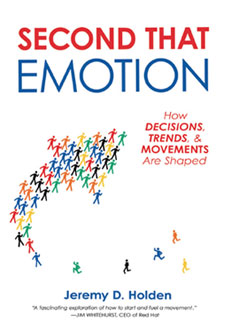
imagesTo mark the passing of Baroness Thatcher who died earlier this week, I am posting a section from my book Second That Emotion which addresses her legacy as well as her ultimate fall from power.

When Margaret Thatcher became the first female leader of a major political party in the United Kingdom—after unseating former Conservative Party Prime Minister Ted Heath—and then won a national election to become Britain’s first woman prime minister in 1979, she didn’t so much break the glass ceiling as demolish the entire building.
Thatcher was the daughter of a middle-class grocer from the largely forgotten town of Grantham, in the middle-eastern region of England. Bright and ambitious, she went to Oxford University, became a barrister (lawyer) before entering politics and being elected to the UK Parliament in 1959, where she represented the North London district of Finchley. She rose up through the party ranks to become education secretary before ultimately challenging and defeating the then leader and former prime minister Ted Heath, and becoming leader of the Conservative Party in 1974. The notion of a woman prime minister at that time was unusual enough, but for a middle-class woman from Grantham to ascend to the leadership of the oldest and most elitist political party in Britain—whose former leaders had included William Pitts, Benjamin Disraeli, Sir Winston Churchill, and Sir Anthony Eden—was an extraordinary achievement in itself.
images-2People only tend to embrace dramatic change in times of crisis, and Britain’s economy and the resulting unrest at the time certainly warranted that label. The so-called “winter of discontent,” in the United Kingdom in 1978–79, with the resulting labor strikes, sky-high taxation, and record unemployment under the Labour government of Prime Minister Jim Callaghan, opened the door for dramatic change and reform, paving the way for Thatcher’s Conservative Party to win the 1979 election and make her Britain’s first woman prime minister.
A series of historic events and memorable statements, and a nickname that stuck, helped to define the nature of the social contract that the British people established with Margaret Thatcher—as the basis for the culture shift that came to be known as Thatcherism. She was Maggie, the “Iron Lady” who stared down the powerful miner’s union, stood up to the mighty Soviets alongside President Reagan, liberated the Falkland Islands from Argentina, survived a brutal assassination attempt by the Irish Republican Army (IRA) in a Brighton hotel, and “handbagged” the mostly male members of parliament and her cabinet into submission.

One of her famous handbags recently sold for almost forty thousand dollars in June 2011 at a London charity auction. She once famously commented that, “If you want something said, ask a man, but of you want something done, ask a woman.” Whatever your political persuasion, you cannot but acknowledge that Margaret Thatcher was a formidable political operator.
images-3She was an ordinary yet extraordinary woman, who rose to the apex of national and world politics by being true to her conservative principles and following her version of the economics of common sense—which she spoke to in a way that the average family sitting around the kitchen table could understand. She was utterly intractable and her famous comment at the 1980 Conservative Party conference helped define her for a decade in power: “You turn if you want to. The lady’s not for turning!”
Thatcher’s social contract stated: Maggie is one of us made good. She took on the elitists and the militants at home and beat them. She stared down the communists and the IRA. She rescued the Falkland Islands and put the economy back on track. She isn’t everyone’s cup of tea, but she’s our Iron Lady, so don’t mess with her.
By 1983 the UK economy had begun to turn around, with stronger growth, lower inflation, and reduced mortgage rates. But Thatcherism wasn’t working for everyone in the United Kingdom: manufacturing output dropped by 30 percent from five years earlier and unemployment reached record levels. Indeed, Thatcherism rep- resented a British version of trickle-down economics, and for the poor and those on the lowest rung of the societal ladder, it was less of a trickle and more of a slow drip.
images-1The illogical leap for the lower and lower-middle classes in the United Kingdom was that someone with a staunchly conservative viewpoint who was committed to the privatization of industry and the resultant reduction in manufacturing, who had been educated in one of England’s most elite universities, and had demonstrated that she didn’t view tackling growing unemployment as a priority, should be a friend of the working man and woman. But the nature of social contracts has always been illogical, and Thatcher’s entrenched image as someone who “took on the establishment” convinced ordinary people that she was indeed a kindred spirit, despite much evidence to the contrary.
Within Thatcher’s own party and her own cabinet there had always been muted voices of resentment against some of her policies and particularly her brusque style of leadership. She was highly skeptical of European integration in all its forms—and particularly economic integration, which she believed had the potential to undermine British sovereignty—and she had become somewhat of a caricature for many with her power suits, her carefully cultivated low speaking voice, and her use of the “royal” we in referring to herself. There were even whispers that Queen Elizabeth II had taken exception to her perceived image as a sort of alternate monarch. However, because of the power of Thatcher’s social contract with the British people, Margaret Thatcher never lost a national election, although at times her polling numbers during the midterm periods dipped below that of her party.
images-4In 1990, Thatcher’s long-serving cabinet minister, Sir Geoffrey Howe, resigned over a disagreement about entry into the European monetary system, and in his resignation speech Howe made a damning statement about Thatcher’s style of leadership—using a cricket analogy to suggest she had “broken her players’ bats before sending them out to play.” Michael Heseltine, a self-made millionaire and former cabinet minister who had held the positions of secretary of state for both the environment and defense, had subsequently resigned from Thatcher’s government over frequent dis- agreements with her. Heseltine was a charismatic figure who was seen by many within the conservative movement as a more “suitable” leader in waiting, and after Howe’s resignation, Heseltine took the opportunity to challenge Thatcher—boosted by polling numbers that suggested he would be a more popular leader going into the 1992 election.
The nature of a social contract is such that it’s the people that both establish the contract and set the terms, not the other way around. Thatcher’s supporters may have been tiring of her style of leadership and sought a new direction and a fresh face, but she was still their Iron Lady and it was they who would vote to decide when it was time for her to go—just as they had done with Churchill after World War II—and not a small clique of Conservative Party members of Parliament.
Heseltine was popular and a talented leader, but for him to be seen to have unseated Thatcher, rather than the people who put her there left them feeling disenfranchised and angry, and they let the Conservative members of Parliament know it in no uncertain terms. The result was that although Thatcher was forced to step down after failing to defeat Heseltine in the leadership contest. Ultimately, however, Heseltine was defeated in the next ballot by the compromise candidate John Major—who with Thatcher’s endorsement went on to succeed her and ultimately win the 1992 election.
images-6Perhaps the ultimate loser of the coup against Margaret Thatcher was the Conservative Party itself. The party’s failure to understand the true nature of the social contract that the British people had established with Margaret Thatcher resulted in the Conservative Party losing not one but two strong leaders. And while John Major was able to scrape a narrow victory at the national election in 1992, at the following election in 1997, Tony Blair’s Labour Party tossed the Conservatives out of power in a landslide victory.Successive Labour governments then governed until 2010, when a repackaged Conservative Party under David Cameron, in coalition with Nick Clegg and the Liberal Democrats, regained power.
Ordinary voters are the creators and owners of the social contract, deciding not just the terms but also when it is time to end the contract—and in failing to understand that, the Conservatives paid a heavy price in the political wilderness for thirteen long years.


The Certainty Of March Madness

Second That_coverWith March Madness upon us and plenty of discussion about 2013 being one of the most open tournaments in recent years, I’ve included a section from my book Second That Emotion, on the sanctuary we find in certainty, and why this years winner is still likely to be one of the usual suspects.

Do people really prefer parity and the opportunity for anyone to
win, or does it make things too complicated and take away from their sense of certainty? It’s never hurt tennis having an undisputed world No. 1 champion, as long as there was at least one credible rival who could keep things interesting.

imagesIndeed, the height of tennis’s popularity as an international sport has always been at those moments where there is a young prince battling to unseat a king, as in the eras of Björn Borg versus John McEnroe and more recently, Roger Federer versus Rafael Nadal, and Nadal versus Novak Djokovic.

 
The NCAA “March Madness” college basketball tournament provides an interesting case in point. In contrast to the BCS (Bowl Championship Series) college football bowl system—which seems to have a myriad of bowls provoking constant criticism from everyone including President Obama for its inability to crown an undisputed national champion—the NCAA tournament appears to give every team that makes the tournament the chance to be champion. images-2

And yet the actual winners since the late 1990s tell a different story. It is the powerhouse college basketball programs that have consis- tently dominated, with the likes of Duke, Carolina, Florida, Kansas, Kentucky, and Connecticut collectively winning twelve of the last sixteen tournaments played. Although fairytale teams with lower tournament seeds like Davidson led by Stephen Curry’s pinpoint shooting in 2008, and VCU in 2011, have threatened to upset the natural order of college basketball by winning the tournament, at the last hurdle they always seem to fall to the usual suspects.

 
images-1March Madness enthralls us because it offers both the excitement of a completely open competition and at the same time a sense of cer- tainty, as the winner is almost always one of college basketball’s titans. The power of a social contract with a player, a team, or a tournament lies partly in its ability to provide certainty—yet it’s impossible to have certainty in an environment where absolute parity causes a sea of com- petitive sameness. So, perhaps counter-intuitively, certainty is a central element in the creation of a culture shift—or at least the illusion of certainty—because it provides the confidence that Disciples and the Congregation need to move beyond the status quo.

Go Heels.

 
Leave a comment

Posted by on March 15, 2013 in Uncategorized


Tags: , , , , , , ,

Look Who Else Is Back

A novel by the previously little known author Timur Vermes, titled Er Ist Weider Da, which roughly translated means “look who’s back”, has taken Germany, and seemingly much of Europe by storm. And when it’s translated into English we can assume it will have a similar impact in the U.S. http://maclehosepress.com/blog/tag/look-whos-back/

imagesIn Timur Vermes’ blacker than black novel, Adolf Hitler wakes up feeling understandably confused in modern-day Berlin. Vermes has stated that he felt the two caricatures of Hitler that we’ve adopted today, that of the “shouting man” and that of the “imbecile”, are comfortable because they stop us having to think about how this monster was able to attain popular support, and ultimately rise to power. Having written extensively about the nature of the “social contract” that Hitler established with the German people prior to WWII in my book Second That Emotion, I was fascinated to read about Vermes depiction of the Fuhrer der Nation. http://www.amazon.com/Second-That-Emotion-Decisions-Movements/dp/1616146648/ref=sr_1_1_title_0_main?s=books&ie=UTF8&qid=1362851451&sr=1-1&keywords=second+that+emotion

images-1After his reawakening Hitler becomes an accidental stand-up comedian and web sensation, although he fails to grasp the fact that his energetic routine is being viewed as comedic by most. On a serious note Vermes manages to show us the innate charisma that Hitler possessed, as he manages to gather supporters around him again. The charm of the novel lies in being able to see the quirks of our modern world through Hitler’s eyes, and often Hitler’s reaction is darkly funny. For example Hitler is entirely unable to grasp why a group of women he observes are picking up poop after their dogs. Baffled, he takes solace in the fact that these idiotic women will be sterilized once he returns to power! Er Ist Weider Da caused me to ponder which other figures from history we might actually welcome to the modern age, and what they might make of what they found.

images-2For starters, Jesus Christ would struggle mightily with the various factions and Churches that have arisen in his name, and could certainly make himself useful next week by joining the Conclave in the Rome, to choose the new Pope. That should take the politics and ambiguity out of the Cardinals decision for once. How Jesus would respond to the astonishing affluence he encountered in the Vatican, one can only imagine. And who would not welcome the return of the Prophet Mohammed, as he sought to explain his Gandhi-like policy of non-violence to a no-doubt bewildered looking group of militant Jihadists.

images-3And on a lighter note who wouldn’t love to hear a returned Oscar Wilde’s impression of today’s Realty Television, or observe Orville Wright’s frustration in boarding a delayed commuter flight at La Guardia, or how about watching JFK trying to live his personal life in the context of today’s invasive media. But perhaps the greatest return to imagine would be a sit down conversation between MLK and President Obama. Would Dr. King be pleased with the first African-American President’s performance thus far, and what advice would he have to offer for his second term?

Respond and let me know what you’d like to see a figure from the past commenting on.


NYT Article On Celebrity Forgiveness That I Contributed To

FROM TODAY’S NEW YORK TIMES BUSINESS SECTION, “SHORTCUTS” ARTICLE : http://www.nytimes.com/2013/02/23/your-money/why-its-not-always-good-to-forgive.html?pagewanted=all&_r=0

Sometimes It’s Good Not to Forgive

By ALINA TUGEND
Published: February 22, 2013

IT seems, these days, that we can barely keep pace with the tales of the famous and near famous who climb to great heights, plummet to great depths and then try to work their way back into the public’s affection.

George Frey/European Pressphoto Agency

A brew pub in Park City, Utah, showed Lance Armstrong’s interview with Oprah Winfrey acknowledging his use of a variety of performance-enhancing drugs. Celebrities’ falls raise questions about forgiveness and atonement.

Since the beginning of this year alone, we’ve had Lance Armstrong’s sort-of apology interview with Oprah Winfrey acknowledging his use of a variety of performance-enhancing drugs, the efforts by the fashion designer John Galliano to put an anti-Semitic tirade behind him and the seemingly ill-fated, public (and lucrative) mea culpa by the best-selling author Jonah Lehrer for plagiarism and fabrication.

Even as I was writing this column, news broke about another fallen celebrity: Oscar Pistorius, the South African double-amputee Olympic runner, was charged with murder in the shooting death of his girlfriend.

These never-ending stories may not affect our lives — except, perhaps, to make us more cynical when the mighty fall. But they do raise questions about forgiveness and atonement that are important outside the world of the celebrity.

“Stories of trust violations abound in the media and business press,” Kurt T. Dirks, a professor of managerial leadership at Washington University in St. Louis, and colleagues wrote in a recent journal article. “However, these high-profile incidents are vastly outnumbered by the many trust violations that occur in the offices and hallways and other arenas of virtually all work organizations.”

And with our friends, partners, children, parents and, of course, the companies we do business with.

I’ve written quite a bit about the need for our society to be more open to mistakes and failure. But what happens after that? Is forgiveness automatic? And how difficult is it — or should it be — to get redemption after a serious misstep?

First, what is forgiveness? Jeffrie Murphy, a professor of law, philosophy and religious studies at Arizona State University, who has written about the issue for years, says it is “a change of heart toward someone — overcoming the feelings of anger and resentment that typically come from being wronged by another.”

But it is important to differentiate between forgiveness and trusting someone again, Professor Dirks said. So you may be willing to forgive a business that messed up a deal but nevertheless decide not to work with that business again. Or forgive an abusive partner, but never be in a relationship with that person again. Or even forgive those who committed a crime against you, but still believe they should be punished.

“The question is how much you’ve been personally harmed and what’s at stake for you in the future,” he said. “It depends, also, if we have something to gain by interacting” with the person or business again.

Of course, it is often easier to avoid interacting with a person who has harmed you than a business, because often no good alternatives are available.

But we can feel that we have some control by refusing to buy from a company that has sold us a lemon or provided terrible service. And, on occasion, enough consumers have pulled together to force a company to back down, as they did in 2011, when Bank of America bowed to customer pressure and dropped plans to impose a $5 monthly fee on debit cards.

Research has also shown that we seem to be more willing to forgive — and trust again — those who make errors of competence rather than of character, Professor Dirks said.

“We believe issues of competence are changeable over time, but not issues of character or integrity,” he said. “And the truth is that probably you can change certain skills, but the underlying value system is probably harder to change.”

It has become somewhat common wisdom to believe that forgiving a person who did you wrong is not just the right thing to do, but will make you emotionally, and even physically, healthier in the long run by alleviating the anger and stress you feel.

But Professor Murphy warned against assuming that forgiveness was always the right answer and that someone who failed to offer forgiveness was “not a good person or a mentally healthy person.”

“It’s a good thing and a blessed thing to forgive, but I am skeptical of any universal sentiment,” he said. “Some people may be liberated by forgiving. Some may be liberated by getting even. Saying that people should automatically be forgiven doesn’t do justice to different moralities and different psychologies.”

For example, he said, when he was a professor in Minnesota, he used to offer a colleague a ride to work during the harsh winters. The colleague then questioned his professional integrity in an unrelated matter, and refused to apologize.

“Did I forgive him?” he said. “No. I got pleasure seeing him wait for the bus in the freezing cold while I drove by in my nice warm car.”

And, some experts say, forgiving an offense too quickly or too readily may just paper over the offense and leave it to fester.

What about our curious relationship with celebrities who have fallen? Why do we feel betrayed by people we don’t really know? And are we more forgiving of them than of the people in our own lives?

Jeremy D. Holden, who wrote about political, cultural and commercial movements in a book called “Second That Emotion” (Prometheus Books, 2012), said he believed that we develop a “social contract” with famous people that is based not on logic, but rather on the mistaken belief that we actually understand them because we hear and read about them so much.

“We feel we know these people intimately,” he said. “And they don’t ask anything of us — they just give us pleasure.”

We also imbue celebrities with traits they don’t necessarily have, often because that’s the image they’re trying to sell and that we’re very willing to buy.

As the blogger Deborah Dunham wrote, in a post about her feelings of anger and disappointment toward Lance Armstrong: “We wanted to think that someone could be the idol, the comeback champion, the survivor, the dad, the do-gooder and the boyfriend of a sexy rock star all wrapped up into one fit, strong body. Because if it was possible for one guy to have it all in such a big way, well, maybe, just maybe, we could have a slice of our own American dream.”

But the question of whether we should forgive Lance Armstrong or any of the celebrities who have let us down is irrelevant, Professor Murphy said.

“How have these celebrities wronged me? You have to be a victim in order to be wronged,” he said. “We have a fantasy image of them and we feel let down by them. That’s more our fault than theirs.”

One thing that is true — famous people, whether athletes or actors, are more likely to be able to overcome serious setbacks than the average Joe. Eve Tahmincioglu, a spokeswoman for the Families and Work Institute, noted, for instance, that most workers would be fired if they admitted to having sex with a subordinate. But David Letterman wasn’t. And Kobe Bryant, who was accused of sexual assault by a hotel worker, said they had consensual sex but still made a public apology and continues to play with the Lakers.

Even Mike Tyson, convicted of rape, seems to be on the comeback trail — working with the director Spike Lee last year on a one-man Broadway play and doing the talk show circuit.

But a noncelebrity would have a hard time simply getting hired with a criminal record or even a bad credit score, Ms. Tahmincioglu said.

One could argue that few of us have the talents that these superstars possess and that we need to separate their skills from their personalities.

Maybe. But it is also the case, as Ms. Tahmincioglu said, that when you are on the bottom and mess up, “you are doubly in trouble.”

Perhaps one reason that we give the famous a pass, she said, is that we wish someone would give us a pass sometimes.

E-mail: shortcuts@nytimes.com


President Morsi’s Failure To Establish A Social Contract

I wrote extensively in my book Second That Emotion, about the likelihood of continued turmoil in Egypt unless a “Chief Disciple” could emerge and establish a social contract with the majority of Egyptians. Instead President Morsi has had the polarizing impact of a “Zealot” creating division and the escalating unrest we are seeing in Egypt today.

Image

http://www.usatoday.com/story/news/world/2013/01/29/egypt-army-chief-warns-of-collapse-of-state/1873459/

Attached is an extract from my book which helps to explain why the situation has deteriorated so swiftly:

http://www.amazon.com/Second-That-Emotion-Decisions-ebook/dp/B0098PNMZ8/ref=sr_1_1?s=books&ie=UTF8&qid=1359569036&sr=1-1&keywords=second+that+emotion

The events of January and February 2011 surrounding the Egyptian uprising that led to the ouster of President Mubarak are illustrative of the distinct roles played by each of these subgroups, as well as providing a window into each group’s unique character- istics. When Wael Ghonim, a marketing manager at Google, used Facebook to administer his now-infamous “We Are All Khaled Said” page, in reference to the young businessman who died at the hands of undercover police, he planted the initial anti-Mubarak propaganda that motivated the Zealots to rise up.

In the uprising the Zealots were a group of twenty-something, heavy social-media-using, relatively well-educated Egyptians who took their pent-up frustration at the daily restrictions and often brutal nature of the Mubarak regime and coalesced around the death of Khaled Said. They used social media as their primary tool, to both incite others and to organize the protests.

The defining characteristics and persona of the Zealots were on display in those early hours of the uprising. The Egyptian populace as a whole was shocked by the extreme nature of the anti government propaganda being expressed. The call was for the ouster of Mubarak, rather than for something or someone else. The early protestors were viewed as extremists and therefore as outsiders, and there was no sense given of the possibility for compromise. Indeed, in those early hours the populace as a whole might easily have turned against the Zealots, as most were absent from social media, and the people sensed a militancy that had the potential to wash away not only the Mubarak regime but also any benefits they valued under the regime. There was a puritanical quality to the uprising while the Zealots drove it, which was at once invigorating while at the same time frightening for the Congregation.

On the third day, the Disciples found their voice. Men like Mohammed ElBaradei, the 2005 Nobel Peace Prize winner and former director general of the International Atomic Energy Agency, became fully engaged. And as the Disciples joined, the tone of the rhetoric around the uprising changed from simply calling for the ouster of Mubarak to becoming pro democracy. Information went from being shared exclusively through social media to more traditional media such as the use of leaflets. El Baradei and other voices that emerged on the third day showed all the characteristics of the Disciple persona. They hadn’t been the instigators, but they were able to better express the emotion of the Congregation.

They appeared strong and impassioned, and indeed El Baradei continued the call for Mubarak’s immediate departure. There was a forceful yet pragmatic aspect to their protest, which appeared to be well informed about how the regime would likely respond. The Disciples were activists but with a moderate tone, and interestingly it wasn’t until they became vocal that the Mubarak regime truly sensed the threat and organized the counter protests that ultimately caused its demise.

Assuming the military keeps its promise to hold truly democratic elections in 2012, in the end it will be the Congregation who will determine the future of Egypt, but they will be led by Disciples rather than Zealots—and no doubt many of the early Zealots will consider the outcome to be a poor compromise against the purity of their ideals and the passion that led to the initial uprising. As new violent protests erupted in January 2011 in Cairo against the slow pace of reform, one could already see that frustration bubbling under the surface. And when in the same month El Baradei confirmed he wouldn’t be seeking the presidency because he didn’t believe the forthcoming elections would be free and open, it sent a further ominous signal. Certainly the movement cannot realize its goals until a true leader has emerged as a rallying point, and the formation of a new social contract with the Egyptian people is established.

 
Leave a comment

Posted by on January 30, 2013 in Uncategorized


Follow

Get every new post delivered to your Inbox.

Join 154 other followers